Metro Rail Case Study — Solving real world issues
Complete product design project process can be read here: https://medium.com/@sharath83/case-study-solving-real-world-issues-faced-on-metro-rail-apps-in-india-c722e0258598
Here’s my process of designing a mobile app for ‘Metro Rail App’ simplify the travel experience.
Metro App — Build with AI approach — Capstone Project
Every failed QR scan, every payment glitch costs trust and revenue. Now imagine a metro app that eliminates these pain points — boosting ticket adoption, cutting operational friction, and building loyalty among millions of daily commuters... With AI-driven personalization, offline-first ticketing, and inclusive design at its core, this app doesn’t just solve today’s frustrations — it future-proofs metro travel for a rapidly growing urban population.
Why Metro App
One unified metro app for seamless travel, real-time updates, and accessibility for all users.
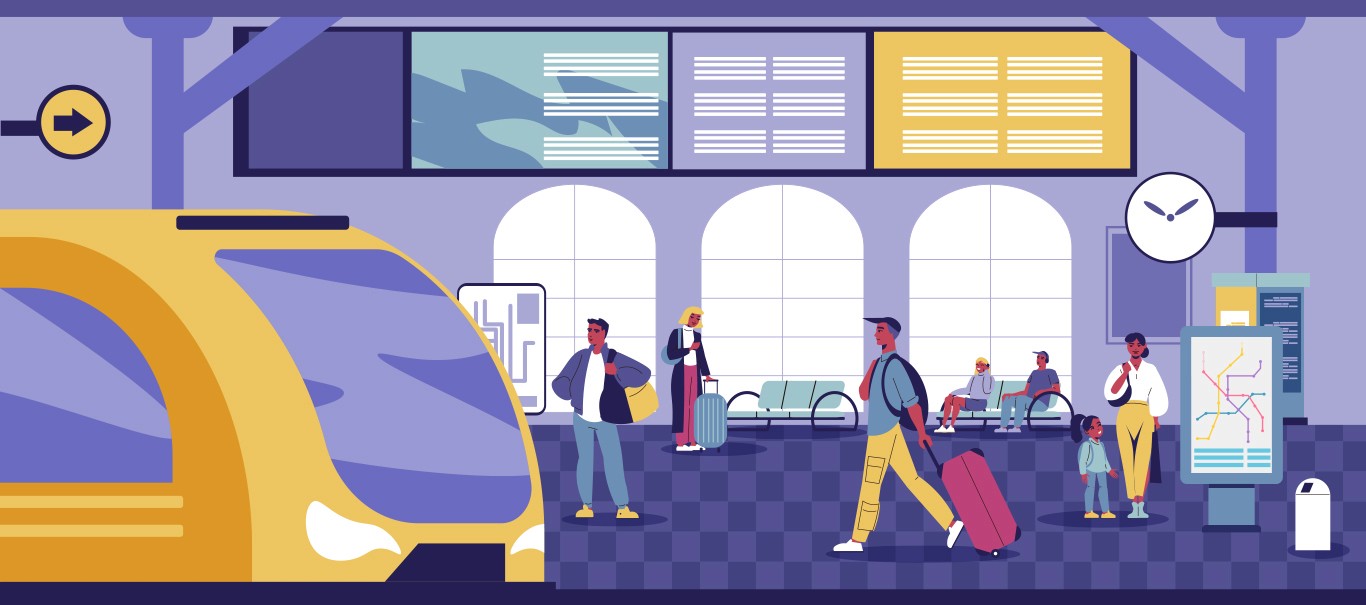
In today’s fast-paced urban landscape, efficient public transportation is essential for seamless daily commutes.
With increasing metro rail adoption across major cities, commuters need one app for all metros that simplifies travel planning, ticket booking, real-time updates, and accessibility features.
A well-designed metro app enhances user convenience by providing multilingual support, inclusive onboarding, and accessibility options for elderly and disabled passengers.
By integrating smart navigation, live train status, and personalized travel preferences, the app ensures a hassle-free, efficient, and user-friendly metro experience, encouraging more people to shift towards sustainable public transport solutions.
01
Problem Statement
Urban commuters struggle with real-time information, navigation clarity, and digital ticketing.
Urban commuters face challenges in efficiently navigating metro systems due to a lack of real-time route information, difficulty in locating nearby stations also not knowing which platform to go to, difficulty reaching destination with proper time tracking, and inconvenient ticketing processes, especially for the first time visitor to the metro station, as well as travelers from other states or countries.
The need for a seamless digital solution that enables users to check metro routes, manage travel expenses, purchase tickets online, share them securely with others and several others remains unmet.
02
Discovery & Research
I began my research to develop a comprehensive understanding of commuter challenges and public transit app shortcomings.
1. What are the primary goals and pain points of daily metro commuters in India’s urban centers?
2. How large and diverse is the urban metro commuter population, and what are their unique needs based on demographics and travel patterns?
3. Why do current metro apps fail to fully address commuter frustrations and accessibility requirements?
4. What operational, technological, or behavioral factors most impact a commuter’s metro journey experience?
5. What are the key barriers users face in seamless ticketing, navigation, and real-time information access?
6. What are the typical steps and decisions involved in planning and executing a metro trip?
7. How are existing competitor apps — local and global — structuring metro travel solutions, and what gaps exist in their approaches?
03
Competitive Analysis
Identify key competitors:
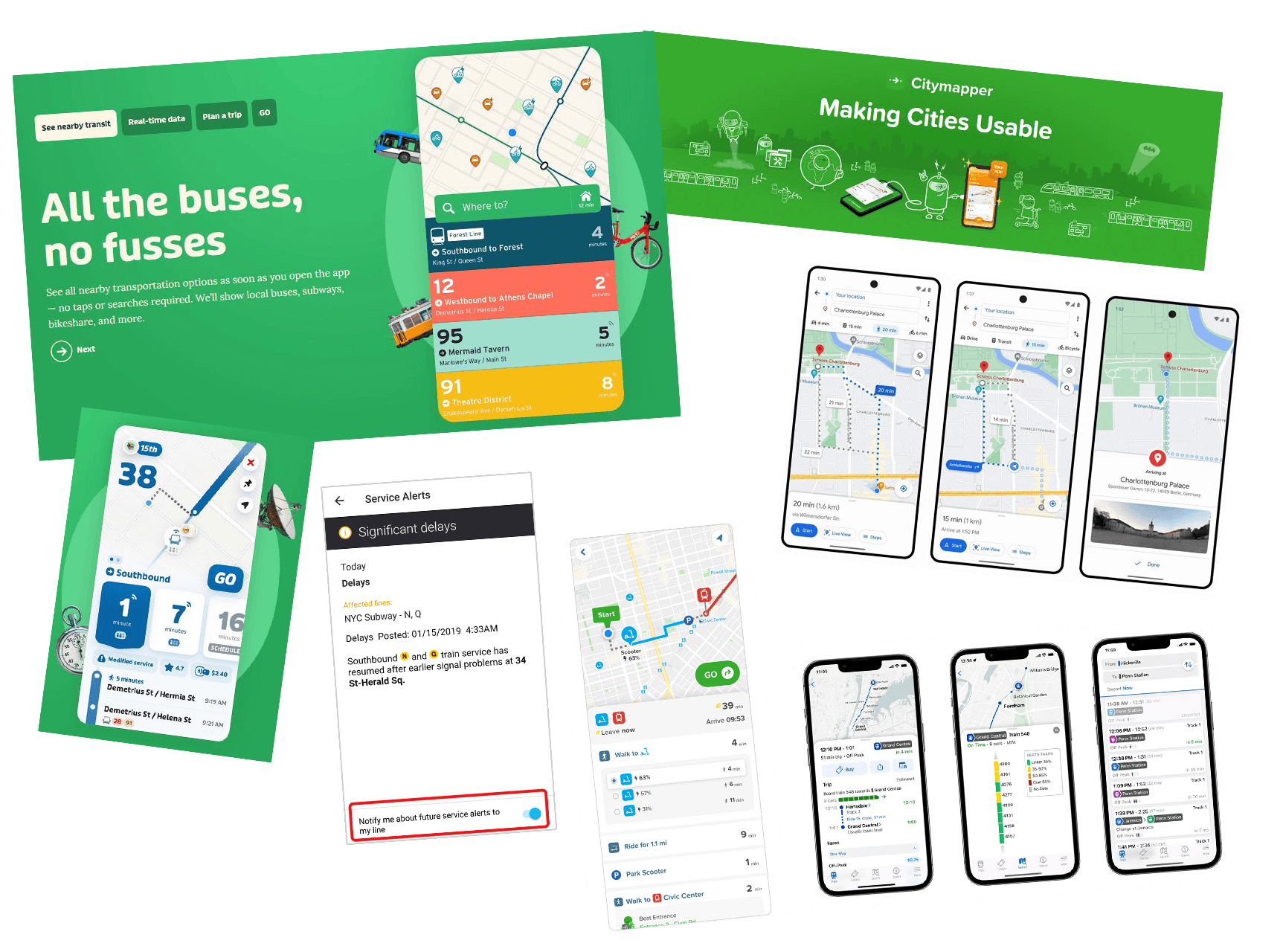
Citymapper — Multimodal real-time routing, cost/speed comparisons, transit + bike/scooter integration.
- A leading multimodal transit app offering real-time routing across buses, subways, bikes, scooters, and even ferries. It stands out with dynamic cost and travel time comparisons between modes, including door-to-door trip planning. Citymapper’s user-friendly interface adapts routes based on live disruptions, providing alternative options instantly. Its integration with micromobility options like bike and scooter rentals makes last-mile connectivity seamless in many cities, delivering an end-to-end urban mobility experience.Transit (app) — Aggregates real-time transit data, supports offline schedules, and integrates ride-share and bikeshare options.
- Focused on aggregating real-time arrival and departure data from multiple transit agencies, Transit excels in delivering accurate information even with intermittent connectivity through offline schedule support. It uniquely blends ride-share and bike-share integration, letting users plan multi-modal trips effortlessly and compare different transport options in one place. Transit’s personalized alerts and service disruption notifications keep commuters informed and help them manage daily travel challenges efficiently.Moovit — Crowd and official data for routing, live alerts, mobile ticketing, and service disruption notifications across 3,500+ cities.
- Moovit relies on a rich blend of crowd-sourced data and official transit information, covering over 3,500 cities worldwide. Its strengths include live transit alerts, mobile ticketing functionality, and comprehensive disruption notifications that empower users to adapt quickly. With multi-language support and accessibility tools, Moovit aims to serve diverse urban populations. Its community-driven updates ensure data freshness and responsiveness to local transit conditions.Google Maps — Robust global coverage, GTFS-based transit routing, glanceable navigation, and seamless integration with calendar and other services.
- Known globally, Google Maps offers robust transit routing powered by General Transit Feed Specification (GTFS) data from municipalities worldwide. It provides real-time transit updates, multi-modal trip planning, and glanceable, contextual navigation hints all within a familiar interface. Deep integration with Google Calendar and personal location history enhances user convenience through smart notifications and personalized travel reminders, making it a go-to app for millions worldwide.MTA (New York) — Official app combining multiple transit modes (bus, subway, ferry), with live tracking, trip planning, and accessibility features.
- As the official app for New York’s Metropolitan Transportation Authority, this app combines data from buses, subways, and ferries to provide reliable live tracking and trip planning. It caters specifically to the needs of its urban users with features such as accessibility options for riders with disabilities, service change alerts, and fare information. Its localized design addresses the complexity of New York City’s diverse transit ecosystem, emphasizing inclusivity and real-time user empowerment.MTA TrainTime — Official commuter rail app for Long Island Rail Road and Metro-North, offering real-time GPS train tracking, multi-station trip planning, mobile ticket purchase with split payment options, live train car crowding info, trip sharing, and in-app customer support chat.
- Official app for Long Island Rail Road and Metro-North riders, offering real-time train tracking with GPS updates every few seconds and live crowd density per car. It enables seamless ticket purchases via Google Pay or credit cards with split payment options and trip planning that supports multiple origin or destination stations. Features include saved frequent trips, trip sharing, and in-app customer support chat, providing a comprehensive, commuter-focused rail experience for New York transit users.
04
Learnings & Reflections
What did i learn?
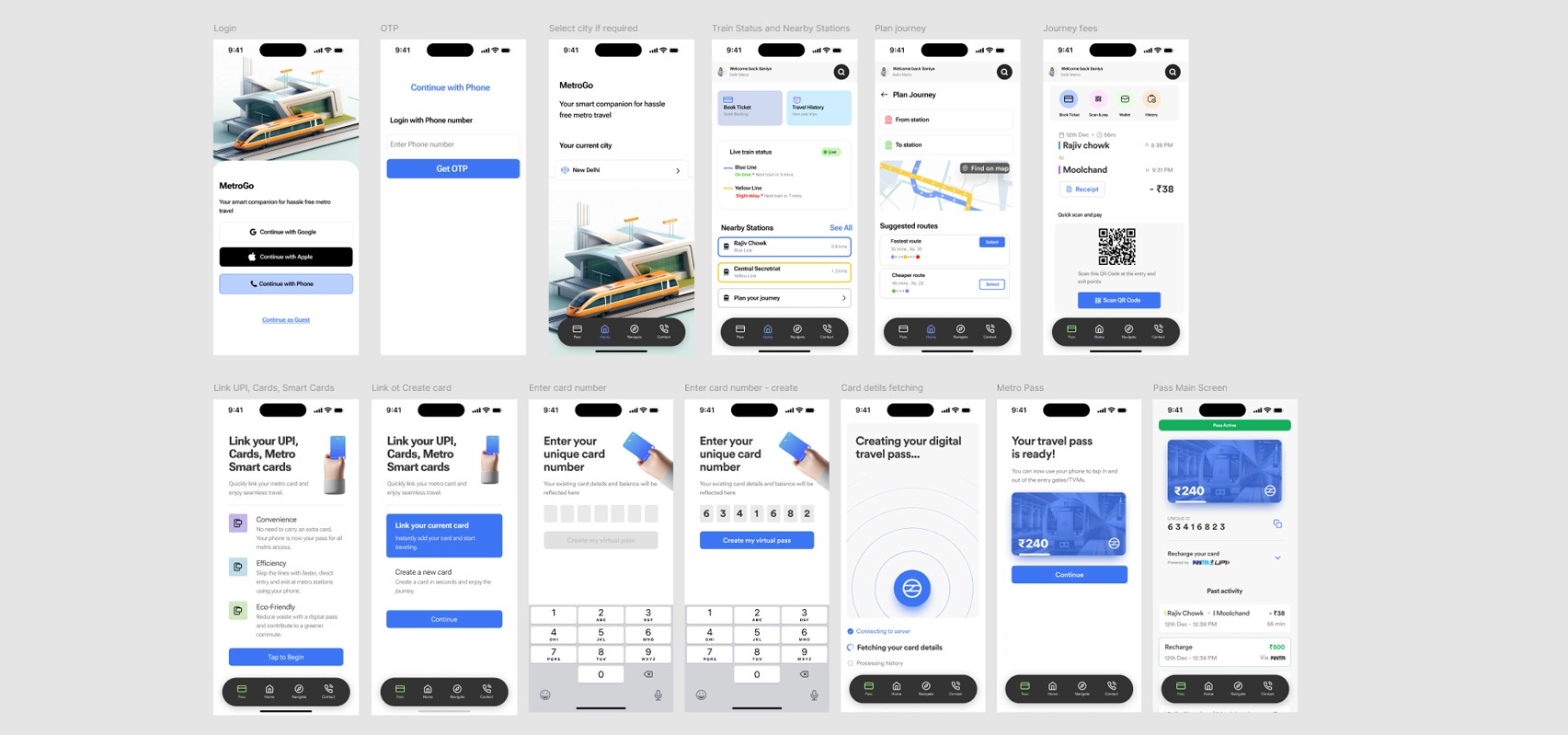
• Designing for public transport apps in India revealed just how crucial robust accessibility and usability are — especially given complex, real-world challenges such as inconsistent ticketing, slow performance, and unreliable internet.
• Comprehensive discovery (reviews, user interviews, station visits) is essential to uncover nuanced commuter pain-points — from payment failures and confusing navigation to accessibility gaps across different cities and demographics.
• Building effective UX for mass transit requires balancing system-wide consistency (UI patterns, flows) with local customization (language, step-free suggestions, context-aware help features), especially in diverse urban environments.
What would i do differently next time?
• Invest even earlier in direct, in-person user research, including more real-time usability audits at metro stations and with different commuter groups, rather than relying heavily on secondary sources and digital feedback alone.
• Prototype and user-test offline-first app features under real station conditions to ensure minimal data dependency and smooth QR ticketing, addressing the frequent connectivity issues observed in daily use.
• Collaborate more closely with metro staff, payment solution partners, and accessibility advocates from the start, to better anticipate technical and operational bottlenecks before launch.
What was my biggest UX insight?
• Streamlined accessibility and error-proof ticketing are critical to making digital metro apps truly usable for everyday commuters — solving core issues such as failed QR scans, payment friction, and confusing hierarchy not only drives adoption, but builds lasting trust and reliability.
• Contextual features (real-time alerts, live indoor/outdoor navigation, quick emergency access) are valued most highly by users, which means UX success depends on anticipating the diverse and dynamic travel scenarios encountered daily — not just offering static information.
These reflections demonstrate deep, actionable understanding of product design for mass transit, and how field research, technical problem solving, and empathy lead to more impactful metro travel experiences in future iterations.
“Great design doesn’t just make an app look better — it makes millions of daily journeys faster, simpler, and stress-free. By eliminating friction at every touchpoint, we don’t just build a metro app — we build trust, accessibility, and a sustainable future for urban mobility.”
Complete product design project process can be read here: https://medium.com/@sharath83/case-study-solving-real-world-issues-faced-on-metro-rail-apps-in-india-c722e0258598